
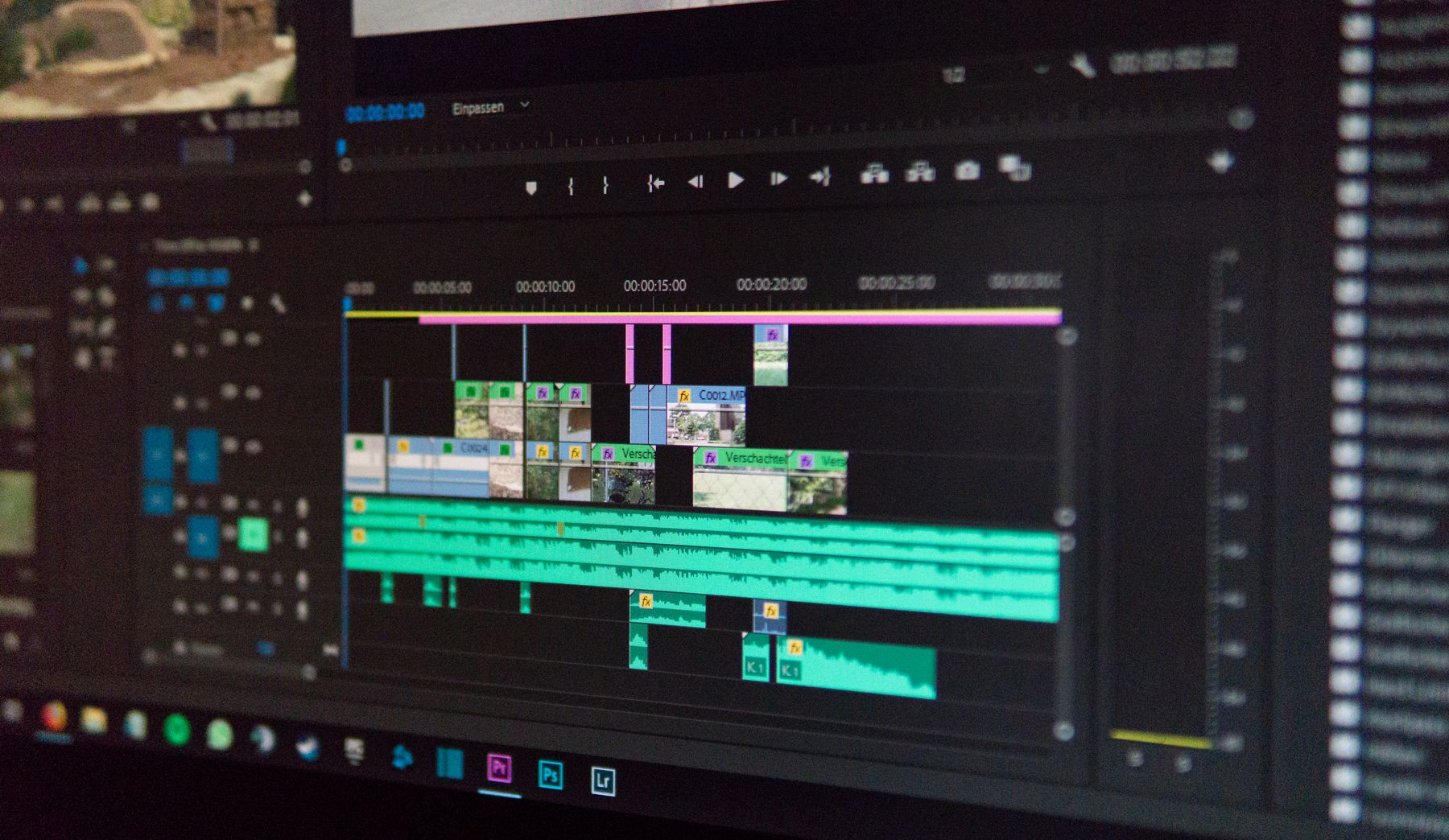
Clients see the shoot: lights, cameras, a crew in motion. What they rarely see is that an equal share of the film is built afterwards, in dark rooms, by people staring at waveforms. Here is what actually happens in post.
The edit — structure
Editing is writing with footage. The editor finds the story's spine, kills good shots that serve no purpose, and controls rhythm — when to breathe, when to cut hard. A rough cut answers "is the story right?"; a fine cut answers "is every frame earning its place?"
The grade — look
Color grading happens in two passes. Correction first: every shot matched, skin tones true, exposure consistent — the invisible work. Then the look: the palette and contrast that give the film its character. A film that "feels expensive" is usually a film that was graded well.
Sound — the half you feel
Dialogue cleaned, rooms matched, music mixed so it lifts rather than drowns, and the small designed details — a door, footsteps, air — that make picture feel real. Audiences forgive soft focus; they never forgive bad audio.
Watch any film you love with the sound off, then with picture off. You will discover which half was doing the heavy lifting.
Conform and masters
The finishing pass: graphics and titles in place, final resolution conform, loudness standards met, and exports tuned per destination — a bright punchy master for Instagram, a broadcast-safe one for TV, a clean archival master for the future re-cut you do not know you need yet.
Why in-house post matters
When the people who shot the film also finish it, intent survives. The lighting choices made on set were made for a grade someone already had in mind. Outsourced post starts from zero; integrated post starts from the brief. That pipeline — edit, grade, sound and conform under one roof — is what our post-production service runs, including post-only projects on footage from any camera.